A Simple Way to Make Bad Water Safe
Sometimes world-changing ideas are, in essence, quite simple. For UNICEF, that's a very good thing.
We're constantly looking for simple solutions to big problems. Some of our favorites? Those bed nets we often write about that can reduce the number of malaria cases by 50 percent. Plumpy'nut"the nutrition-packed nut paste that brings children back from the brink of starvation. Cold-box vaccine carriers, which ensure vaccines maintain their effectiveness in any climate. These are all inexpensive interventions that have huge impact on millions of children all over the world.
Recently, we've been feeling excited about another small (and small-ticket) item that has the potential to make a big difference for children and their families. It's a ceramic water filter"sometimes called a Ceramic Water Purifier, or CWP"and it's proving to be incredibly effective at turning poor quality water into water that is safe for kids and their families to drink.
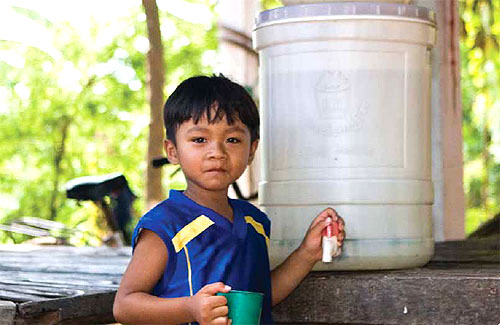
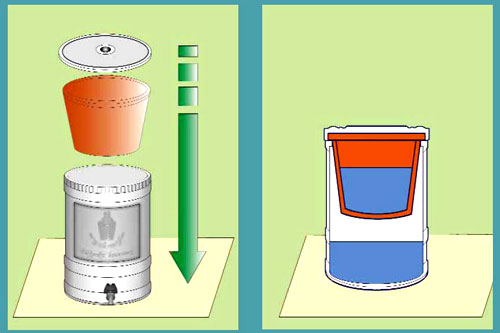
A CWP"first developed by a group called Potters for Peace"looks a lot like a ceramic flowerpot, and is easy and inexpensive to manufacture. A simple hydraulic press forms clay into that flowerpot shape. Rice husks (or a similar combustible substance) have been mixed in with the clay so that, as the filters bake in a kiln, the husks burn off to make the filters highly porous. After baking, they're coated with colloidal silver, which kills bacteria. And they fit snugly into a plastic bucket that's equipped with a lid and a spigot.
Sometimes world-changing ideas are, in essence, quite simple. For UNICEF, that's a very good thing. We're constantly looking for simple solutions to big problems. Some of our favorites? Those bed nets we often write about that can reduce the number of malaria cases by 50 percent. Plumpy'nut"the nutrition-packed nut paste that brings children back from the brink of starvation. Cold-box vaccine carriers, which ensure vaccines maintain their effectiveness in any climate. These are all inexpensive interventions that have huge impact on millions of children all over the world.
Recently, we've been feeling excited about another small (and small-ticket) item that has the potential to make a big difference for children and their families. It's a ceramic water filter"sometimes called a Ceramic Water Purifier, or CWP"and it's proving to be incredibly effective at turning poor quality water into water that is safe for kids and their families to drink.
A CWP"first developed by a group called Potters for Peace"looks a lot like a ceramic flowerpot, and is easy and inexpensive to manufacture. A simple hydraulic press forms clay into that flowerpot shape. Rice husks (or a similar combustible substance) have been mixed in with the clay so that, as the filters bake in a kiln, the husks burn off to make the filters highly porous. After baking, the filters get coated with colloidal silver, which kills bacteria. And they get dropped into a plastic container that's equipped with a lid and a spigot.
Imagine a family in a country like Cambodia, where 66 percent of the population doesn't have access to improved water sources. With a CWP in their home, the family can pour water from just about anywhere into the bucket and, as the water seeps through the filter, the ceramic eliminates up to 99 percent of e.coli.
We know how well they work because UNICEF funded a study of the filters in Cambodia, conducted by the Water and Sanitation Program (WSP). Just recently, the study won the prestigious International Water Association 2008 Project Innovation Award in Vienna. (Yes, studies win awards and yes, we and WSP are very proud.) The study shows that these simple little filters can lower the incidence of diarrhea by 46 percent. The entire initial system costs $7.50 to $9.50 U.S., and replacement filters cost just $2.50 to $4.
The low cost, small size and simplicity of these filters"along with their effectiveness"mean they could potentially improve the lives of many many children who regularly become ill from drinking unsafe water. So there's a pretty good chance you will be hearing more about these filters in the future.
Do you have any simple solutions for improving children's lives? We'd love to hear about them.