Fieldnotes: Blogging on UNICEF's child survival work in the field

« A new era begins | Main | We're well on our way! »

Always on the side of children

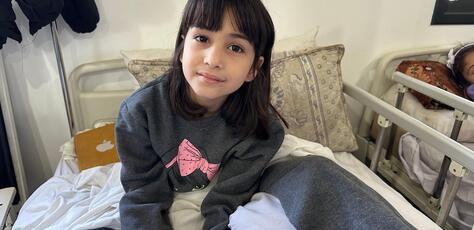
We're very relieved by the news of the Gaza cease-fire. As is the case with all violent conflicts, children have been suffering the consequences of thoroughly adult problems. UNICEF's mission to help children is vital in times like these. And we're not hampered by being on one side or another—we are simply and always on the side of children.

gaza2a-UNI6551_Comp.jpg
© UNICEF/NYHQ2009-0016/Iyad El Baba
Gaza, 2009: On 12 January, a girl waits on a curb with empty water containers in the southern city of Rafah. Approximately 500,000 people have no access to running water. Water and sanitation services have partially collapsed due to considerable damage to the networks, difficulties faced to make repairs and lack of fuel for power. UNICEF is working with partners to distribute supplies, including family water kits.

As I write, UNICEF is delivering six truckloads of emergency supplies and equipment to Gaza. With water and sanitation systems in the Gaza Strip badly damaged by fighting, UNICEF is worried about outbreaks of water-related diseases, such as diarrhea and cholera. So, working with our partners, UNICEF has already distributed more than 66,000 bottles of water, and emergency water and sanitation supplies for some 30,000 people.

Fighting also upended normal food supply lines, and many children are going hungry. UNICEF is rushing to distribute 7,500 cartons of high-energy biscuits—enough to feed 80,000 children for three months. We're also sending in much-needed health kits, obstetric surgical kits, midwifery kits, resuscitation kits, first aid kits and surgical instruments.

gaza1a-UNI6578_Comp.jpg
© UNICEF/NYHQ2009-0028/Iyad El Baba
Gaza, 2009: On January 15, children reach out for food during a meal distribution in the Gaza Strip, in a shelter for people displaced from their homes during the military incursion.

One of the top priorities in the coming days will be to quickly repair damaged schools and community centers so that children have safe places in which to begin rebuilding their lives. As a stopgap, UNICEF will distribute 443 pre-positioned School-in-a-Box kits—enough to help 35,440 young pupils continue their education.

Always for UNICEF, addressing children’s psychosocial needs is a critical component of emergency response. The U.S. Fund for UNICEF is providing aid to the Israel Center for the Treatment of Psychotrauma to help any children in the region who are suffering from posttraumatic stress. UNICEF is also preparing to send teams of counselors and mental health experts into Gaza, in order to help children deal with the violence they have witnessed in the past few weeks. And we're planning to establish 30 family centers where mothers and children can receive psychosocial support.

It's heartbreaking—and maddening—when children suffer through violent conflict. They have no idea why people are fighting—they only know they are scared, hurt, hungry. We're hoping this cease-fire lasts and that, for the sake of children, it leads to an outbreak of region-wide peace.

TrackBack URL for this entry: http://fieldnotes.unicefusa.org/mt/mt-tb.cgi/515

Comments (1)

Elizabeth John:

Hi..

I have completed my Masters in psychological counseling and have specialized in family and marriage counseling. I wanted to know what kind of opportunities there are for me to volunteer in Gaza.Let me know where I can send my CV.
Regards,
Elizabeth John

Post a comment

(If you haven't left a comment here before, you may need to be approved by the site owner before your comment will appear. Until then, it won't appear on the entry. Thanks for waiting.)

Subscribe to our blog

About this blog

Welcome to Fieldnotes. Blogging gives us the ability to quickly report from the field, alert you to media coverage of interest, and share the success of UNICEF's lifesaving work around the globe.

We want to hear from you, so consider using the comment functionality to let us know what you think. Readers, please keep in mind that comments do not necessarily reflect official positions of UNICEF or the U.S. Fund for UNICEF. While we welcome multiple points of view here, we will review each comment prior to posting it and will not post comments that are off-topic or inappropriate for this public forum.

Frequent Contributors

Jen Banbury, Assistant Director of Editorial Services

Kristi Burnham, Director of Community & Volunteer Partnerships

Andrea Carricato, Interactive Marketing Manager

David Donaldson, Director of Education

Mark Engman, Director of Public Policy & Advocacy

Adam Fifield, Deputy Director of Communications

Martin Rendón, Vice President of Public Policy & Advocacy

Caryl M. Stern, President & CEO