Fieldnotes: Blogging on UNICEF's child survival work in the field

« Help stop the use of U.S. cluster bombs | Main | Campaign Volunteers are hitting the pavement »

UNICEF at the Oscars

Well, sort of. If you're a documentary film junkie like me, then you may know that one of the Academy Award nominees for best documentary short this year was a film called The Final Inch. The film shows the work of UNICEF and partners like Rotary International to—once and for all—eliminate polio from the few places on Earth where it still sickens and cripples children.

The film's director, Irene Taylor Brodsky, traveled to India and Pakistan where she trailed health workers as they went door-to-door to dispense the oral polio vaccine to children. In India, Ms. Brodsky followed Munzareen Fatima, a tenacious community mobilizer who works with the UNICEF-led Social Mobilization Network.

More than 465,000 health workers like Munzareen Fatima take to the streets in the Uttar Pradesh and Bihar states of India every six to eight weeks to immunize children. They overcome all sorts of physical, logistical and even cultural barriers to ensure every child gets the polio vaccine.


polio1a-IMG18167_Comp.jpg
© UNICEF/NYHQ2006-2655/Tom Pietrasik
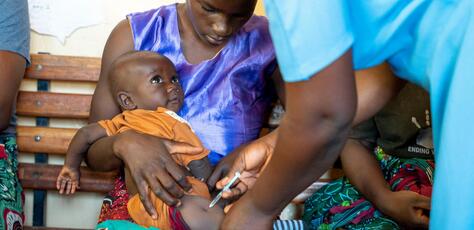
A health worker administers an oral polio vaccine to a girl at the main railway station in Patna, capital of the north-eastern state of Bihar. Vaccinators check children's fingers for ink to confirm their immunization status. Those who have not been immunized are vaccinated on the spot on the platform or train.

In an interview on documentary.org (the site of the International Documentary Association) Ms. Brodsky said, "Audiences are stunned by the sheer size of the global eradication effort. In one single day in India, for example, polio workers can vaccinate more than 150 million children. And several million people work on polio eradication in India alone. Those are astonishing numbers for a disease most of us here in the US have all but forgotten about."

Polio is one of those highly preventable diseases. The very effective vaccine has been around for more than 50 years and those who receive it (that's you and I) don't need to worry about contracting the disease or developing any of the debilitating side effects that accompany it. But millions of children—in countries like India, Pakistan, Nigeria and Afghanistan, where the disease hides in unsanitary water systems—remain at risk.

In "The Final Inch", there's a young man, Gulzar Saifi, who contracted polio as a baby and now uses metal braces and an old iron walker to support his atrophied legs. He's a successful teacher who doesn't waste time on self-pity. For me, however, it's sad to think that just a few drops of liquid could have saved him from a lifetime of physical disability.

"The Final Inch" will air on HBO starting April 1. It didn't win an Oscar, but we couldn't be more impressed by its success as a film and as a tribute to the dedication and resilience of millions of health workers.

TrackBack URL for this entry: http://fieldnotes.unicefusa.org/mt/mt-tb.cgi/541

Post a comment

(If you haven't left a comment here before, you may need to be approved by the site owner before your comment will appear. Until then, it won't appear on the entry. Thanks for waiting.)

Subscribe to our blog

About this blog

Welcome to Fieldnotes. Blogging gives us the ability to quickly report from the field, alert you to media coverage of interest, and share the success of UNICEF's lifesaving work around the globe.

We want to hear from you, so consider using the comment functionality to let us know what you think. Readers, please keep in mind that comments do not necessarily reflect official positions of UNICEF or the U.S. Fund for UNICEF. While we welcome multiple points of view here, we will review each comment prior to posting it and will not post comments that are off-topic or inappropriate for this public forum.

Frequent Contributors

Jen Banbury, Communication & Creative Services

Kristi Burnham, Community & Volunteer Partnerships

David Donaldson, Education

Mark Engman, Public Policy & Advocacy

Adam Fifield, Communication & Creative Services

Elizabeth Kiem, Interactive Marketing

Jenner Pascua, Interactive Marketing

Martin Rendón, Public Policy & Advocacy

Caryl M. Stern, President & CEO