Apr25

Casting a wide net on World Malaria Day

How do fat burning supplements work how do fat burning supplements work. Canada lotto online canada lotto online. Neck wrinkle cream neck wrinkle cream. Governor of poker 3 free download governor of poker 3 free download. Uterine fibroid embolization cost uterine fibroid embolization cost. Symptoms of irritable bowel in women symptoms of irritable bowel in women. Ways to fall asleep naturally ways to fall asleep naturally. Should fibroids be removed should fibroids be removed. Insulite pcos system reviews insulite pcos system reviews. Shemale free live cam shemale free live cam. Herpes remedy report herpes remedy report. Food for anti aging food for anti aging. Getting rid of lines in word getting rid of lines in word. Hydrogen peroxide teeth bleaching hydrogen peroxide teeth bleaching. Thanksgiving bingo game thanksgiving bingo game. Natural remedies for sleep problems natural remedies for sleep problems. How to test candida how to test candida. Cellulite treatment nyc cellulite treatment nyc. Growth hormone releasers growth hormone releasers. Glo teeth whitener glo teeth whitener. Sytropin height sytropin height. Free surveys earn money free surveys earn money. Hemorrhoids treatment otc hemorrhoids treatment otc. Complete survey for money complete survey for money. Sleep for the cure sleep for the cure. Online writing for money online writing for money. How to stop heartburn naturally how to stop heartburn naturally. Colon cleanse lose weight fast colon cleanse lose weight fast. Plans for baby cribs plans for baby cribs. Free online blackjack card games free online blackjack card games. Constant ear buzzing constant ear buzzing. Does olive oil help get rid of stretch marks does olive oil help get rid of stretch marks. Top whitening skin products top whitening skin products. Natural colon cleanse recipe at home natural colon cleanse recipe at home. Roulette online roulette online. Pcos diet recipes free pcos diet recipes free. Management of pcos management of pcos

Michael Sandler is a member of the U.S. Fund for UNICEF Creative Services Team.

Spring is here; the mosquitos are back. And while West Nile virus bears watching, for most of us, the insects are more loathsome nuisance than serious threat to health. Elsewhere, of course, that’s not the case. Mosquito-borne illnesses are a life-and-death matter, and since World Malaria Day is today, on April 25, it’s a good time to stop and take a look at the status of the fight against this ancient and often deadly disease.

On the surface, remarkable progress has been made. Over the last decade, the malaria mortality rate has decreased by over one-quarter globally, and by a full third in Africa. Some countries in particular have made spectacular gains in malaria control, and an effective malaria vaccine may finally be on the horizon.  On closer inspection, however, the situation is less inspiring. Malaria is completely preventable, yet it is not being prevented nearly enough. The 2010 Millennium Development target of a 50% reduction has not been met. There are still over 200 million cases annually, and an estimated 655,000 deaths. About 3.3 billion people—almost half the world’s population—are still at risk of catching the disease.

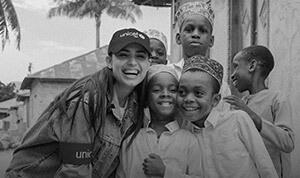
© U.S. Fund for UNICEF/Mia Brandt

As usual, the poorest and the youngest are most vulnerable. Malaria hits hardest in Africa. That’s where 90% of all malaria deaths occur and where the disease accounts for about one in five of all childhood deaths. Malaria isn’t just a cruel killer; it’s also a giant brake on economic development, reducing labor productivity in some of the world’s poorest countries, and monopolizing limited medical resources.

In recognition of the multi-headed threat to families posed by the disease, malaria prevention and control form an essential part of UNICEF’s maternal and child survival interventions. In 2010 alone, for example, UNICEF procured over 41 million malaria treatments, combination therapies that are effective against newer chloroquine-resistant malaria strains. Prevention, of course, is always preferable, and the insecticide-treated mosquito net (ITN) is one of the simplest, and best ways to stop malaria transmission. When children in Africa sleep under these nets, child mortality can be reduced by up to 20%. It’s that simple.

UNICEF is one of the world’s largest buyers and suppliers of ITNs, having scaled up its purchasing twenty-fold since 2000, and is a big reason why the percentage of sub-Saharan households owning at least one ITN is estimated to have risen from 3% to 50% over a decade. You can help that number rise more—an action that is guaranteed to save children’s lives—by making an UNICEF Inspired Gift of 3, or 30, or even 300 insecticide-treated mosquito nets on April 25.

Leave a Comment

Security Code: