Report from Syria: Helping those displaced by violence
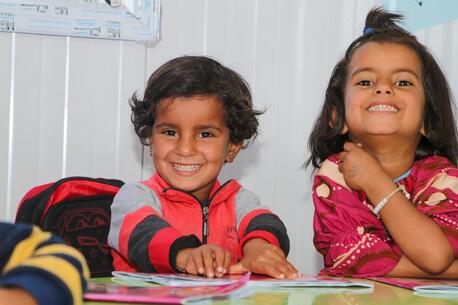
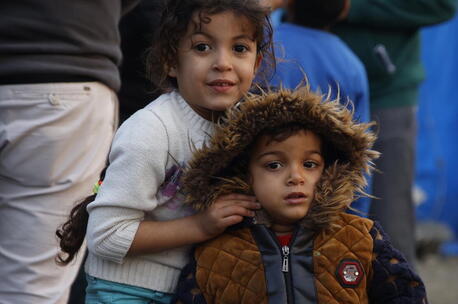
Razan Rashidi, communication officer with UNICEF in Damascus, describes how ordinary people have become essential partners to international organisations who are responding to the crisis. Thousands of people have had to leave their homes to seek refuge in safer places, often schools and mosques. By last weekend, at least 15 schools in Damascus and 18 more in outlying areas were housing displaced families. Some people have taken displaced families into their own homes, but it is becoming increasingly difficult for local residents to meet their own needs, let along those of their guests. Conditions in the local schools and mosques are not easy, either, and even young children are stepping up to help.
Razan Rashid is a Communications Officer with UNICEF in Damascus, Syria.
These have been really difficult times for everyone in Damascus. Thousands of people have had to leave their homes to seek refuge in safer places, often schools and mosques. By last weekend, at least 15 schools in Damascus and 18 more in outlying areas were housing displaced families.
 Local volunteers and relief organizations are working day and night to provide assistance to this population in need. They’ve been doing an amazing job. Ordinary people have helped as well, quickly forming rescue and relief teams in different neighborhoods. UNICEF and other international organizations are in turn working to support these local volunteers.
Young people are especially involved. Some of them have braved the violence to go out looking for anyone needing a place to stay, and taking those who need refuge to schools and mosques housing displaced people.
At one of these makeshift shelters I met Oum Mustafa. She told me that after her family fled their home they spent the night in a public park. “The next day, some young people escorted us to a school,” she told me. “I am so fortunate that my three girls and little baby boy are with me, and my sister-in-law’s family as well.”
Another woman who found refuge in the school looked at her 9-year-old daughter sleeping on a thin mattress on the floor. “I am glad she’s asleep,” she said. “You know, we haven’t slept for the past three nights because the sounds of shelling and helicopters were so loud it was as if they were in our house.”
Some of the schools now sheltering Internally Displaced Persons (IDPs) have received UNICEF support in the past. A colleague visited one classroom where IDPs are now living and noticed the pink door and paintings on the walls—tell-tale signs that this school was part of the network of child-friendly schools UNICEF supported over the past year.
Some people have taken displaced families into their own homes. One woman I know, Manal, who has two children of her own, has been hosting her extended family from Homs in her house for the past three months. Recently they all had to relocate, and took refuge in a school. Such generosity is becoming harder to sustain. Many shops are closed, so it is difficult for local residents to buy enough food and other basics to meet their own needs, let alone those of their guests.
Conditions in the schools are not easy, either. In one school in Masaken Barzeh, around 600 people are using just seven small toilets. The new residents do their best to keep the school clean. But they need cleaning supplies and awareness-raising about the importance of good hygiene. UNICEF is helping by supplying hygiene kits that contain detergents, shampoos, sanitary napkins, soap, towels and other personal hygiene items.
Sometimes the children themselves step up to help. I came across 14-year-old Maya who, along with seven other family members, had been relocated twice. She calls herself a “hygiene expert.” Volunteers were so impressed with her knowledge that it was agreed that Naya would be the school’s focal point for hygiene awareness. Naya promised to spend her free time going around telling other children about proper hygiene. “Younger kids listen to me, but I’m not sure about the grown-ups,” Naya laughed.
Another problem is keeping the children occupied. It is too hot to run around in the yard, and there is nothing to play with. UNICEF is providing the schools with recreational kits and sports kits through its local partners.
Support UNICEF's emergency relief efforts to help children affected by the violence in Syria.
Local volunteers and relief organizations are working day and night to provide assistance to this population in need. They’ve been doing an amazing job. Ordinary people have helped as well, quickly forming rescue and relief teams in different neighborhoods. UNICEF and other international organizations are in turn working to support these local volunteers.
Young people are especially involved. Some of them have braved the violence to go out looking for anyone needing a place to stay, and taking those who need refuge to schools and mosques housing displaced people.
At one of these makeshift shelters I met Oum Mustafa. She told me that after her family fled their home they spent the night in a public park. “The next day, some young people escorted us to a school,” she told me. “I am so fortunate that my three girls and little baby boy are with me, and my sister-in-law’s family as well.”
Another woman who found refuge in the school looked at her 9-year-old daughter sleeping on a thin mattress on the floor. “I am glad she’s asleep,” she said. “You know, we haven’t slept for the past three nights because the sounds of shelling and helicopters were so loud it was as if they were in our house.”
Some of the schools now sheltering Internally Displaced Persons (IDPs) have received UNICEF support in the past. A colleague visited one classroom where IDPs are now living and noticed the pink door and paintings on the walls—tell-tale signs that this school was part of the network of child-friendly schools UNICEF supported over the past year.
Some people have taken displaced families into their own homes. One woman I know, Manal, who has two children of her own, has been hosting her extended family from Homs in her house for the past three months. Recently they all had to relocate, and took refuge in a school. Such generosity is becoming harder to sustain. Many shops are closed, so it is difficult for local residents to buy enough food and other basics to meet their own needs, let alone those of their guests.
Conditions in the schools are not easy, either. In one school in Masaken Barzeh, around 600 people are using just seven small toilets. The new residents do their best to keep the school clean. But they need cleaning supplies and awareness-raising about the importance of good hygiene. UNICEF is helping by supplying hygiene kits that contain detergents, shampoos, sanitary napkins, soap, towels and other personal hygiene items.
Sometimes the children themselves step up to help. I came across 14-year-old Maya who, along with seven other family members, had been relocated twice. She calls herself a “hygiene expert.” Volunteers were so impressed with her knowledge that it was agreed that Naya would be the school’s focal point for hygiene awareness. Naya promised to spend her free time going around telling other children about proper hygiene. “Younger kids listen to me, but I’m not sure about the grown-ups,” Naya laughed.
Another problem is keeping the children occupied. It is too hot to run around in the yard, and there is nothing to play with. UNICEF is providing the schools with recreational kits and sports kits through its local partners.
Support UNICEF's emergency relief efforts to help children affected by the violence in Syria.

Children, women and families receive humanitarian assistance at a school in Damascus which has been converted into an IDP center. ©UNICEF/Syria/ 2012/RRashidi