Ordinarily, the tiny town of Jimani on the Dominican Republic’s southwest border with Haiti could be described as sleepy and nondescript. Safe for the military barracks and a few outdoor produce markets, day-to-day life seems to pass without much variation. This has all dramatically changed however in the days since a massive earthquake rocked Haiti, reducing its capital and surrounding communities to rubble.
![]() |
| © U.S. Fund for UNICEF/Alleyne/2010 |
| Haitians seeking treatment and curious area residents congregate outside a hospital in the small border town of Jimani in the Dominican Republic. |
With telecommunications spotty at best and flights into the capital city of Port-au-Prince still a logistical challenge, scores of UN agencies, relief groups and government ministries have descended upon Jimani transforming it into a hub of humanitarian activity.
While efforts to aid the three million Haitians affected by last Tuesday’s earthquake involve getting relief supplies in through any and all available ports and airstrips on Haiti’s western and northern coasts, the primary coordination of relief efforts are occurring from Jimani--the closest point to Port-au-Prince on Haiti’s eastern border.
Jimani’s proximity to Haiti’s capital, (just under an hour’s drive) makes dispatching relief teams to the crumbled city considerably easier, but it also makes for an attractive destination to Haitians desperately seeking medical attention for their injuries.
|
| © Architect of the Capital |
As 2009 drew to a close, President Obama signed into law an appropriations bill to fund a variety of government activities. Included in this package was $132.25 million for the U.S. Government’s contribution to UNICEF.
This is the largest amount ever given to UNICEF by the United States. It will support UNICEF’s ongoing programs to save and improve the lives of children around the world. And it will help to hasten the day when no child is allowed to die a death we can prevent.
All of us have a role to play in saving children’s lives – and that includes our Government. As concerned citizens, we must ask our leaders and legislators to pursue a foreign policy that makes child and maternal health a top priority.
The annual U.S. contribution to UNICEF is a vital part of that effort. This year’s funding increase reflects the hard work and engagement of people across the country who took the time to contact their Senators and Representatives.
Next month, the President will be submitting to Congress his Budget Request for the next Fiscal Year. Once again, we will be asking you to join us to urge our legislators to craft a budget that makes saving children a goal of America’s global assistance. With your help, this can be the year when even more children survive, develop, and advance. What better resolution can we make for 2010?
“Go Green” has become a popular catch-phrase over the last few years, with campaigns encouraging everything from recycling to driving electric cars to eating organic chickens. We all know that reducing our carbon footprint is important for future generations. What you may not know is that climate change is about more than just ensuring the future of the planet’s resources—it is a very present and real danger to millions of those most vulnerable to its harmful effects: the world’s children.
Remaining pockets of violence, millions of Internally Displaced Peoples, massive human rights violations and a lack of basic social services severely hinder the efforts of Gill and other aid workers. “Humanitarian access is limited,” said Gill, “because there is virtually no infrastructure…a wooden bicycle used to transfer goods to market is about as advanced as it gets.” Gill and her colleagues also face a constant security risk and must take daily precautions against attacks—they are not even allowed to walk on the streets.
|
| © UNICEF/NYHQ2008-1226/Kate Holt |
| Children play a game of ‘blind man’s bluff’ with a group leader in a UNICEF-assisted child-friendly space in a camp for the displaced. |
Against all odds, UNICEF has done amazing work for the children and people of the DRC, evident in both in the statistics and in the personal success stories that Gill shared. UNICEF has distributed 5.5 million anti-malaria bed nets, begun an initiative in maternal care/newborn survival, implemented a zero-child soldier advocacy campaign and opened 515 health centers. This year alone, we rescued and rehabilitated 2813 children from the armed services and militias, assisted 9,347 sex violation survivors, placed 35,354 children into child friendly spaces and distributed 155,544 packages with materials for mental and physical care and protection.
UNICEF is also using an innovative new system of faith-based and community initiatives to create peaceful and lasting changes. Representatives work with religious and village leaders to instill in the people basic sanitation practices, such as hand washing, and to reverse harmful traditions (many of which target girls and women) from within the community itself.
Gill spoke of her work as a challenge, but one that offers lots of rewards. “We are in the unique position of being a massive service provider and also an advocate for children,” she said, “And these children need all the help they can get.”
As Kimberly-Clark Brazil's liaison for UNICEF, Jefferson Correia has had the opportunity to see UNICEF’s child survival initiatives in Brazil firsthand. In Jeff's own words: "This role has given me the chance to better understand UNICEF’s projects and the country where I live."
In Brazil, Kimberly-Clark and UNICEF have been partners since 2007. Since then, Kimberly-Clark has partnered with UNICEF by supporting projects to address the needs of indigenous children and adolescents living in the Amazon and quilombolas (Afro-Brazilian) populations in the desert-like Semi-Arid region. These two populations represent the lowest child development rates in the country, live far away from where the resources are, and are quite distant from authorities, statistics and public opinion. Despite all of the difficulties facing these children, I was surprised to see how much potential exists, thanks to UNICEF’s efforts and the support offered by local NGOs. I witnessed these young people attending schools and fighting to improve illiteracy rates. They are receiving quality educations, related to their local culture and context, which are enabling them to become conscious citizens as adults.
It's a very exciting day for us here at the U.S. Fund for UNICEF. As you may have seen in this morning's New York Times, UNICEF has announced that the number of children under the age of five dying each day from preventable causes has dropped to 24,000. Only three years ago, 25,5000 children were dying each day. Just imagine—now 1,500 more children are surviving, playing, laughing, growing every single day. As President and CEO of the U.S. Fund—and as a parent—I am thrilled to be able to share this news with you.
My colleague Adam Fifield and I spend a lot of time writing about child survival issues. And most of the writing we do isn't for this blog—it's for speeches and publications that also play a major role in telling folks about UNICEF's crucial work. Our magazine, Every Child, probably takes up most of our focus. We may spend months researching and writing articles that convey the extraordinary range of what UNICEF does for children around the world.
It's that range—that scope—that keeps me perpetually impressed by UNICEF. At any given moment, UNICEF may be vaccinating up to a million children in Sierra Leone, getting emergency supplies to cyclone victims in Bangladesh, creating safe schools for children in Afghanistan, helping former child soldiers find work in Columbia, distributing hundreds of thousands of bed nets to protect children against malaria in Nigeria—the list goes on and on and on. Which means we never run out of things to write about.
Throughout the holiday season, the UNICEF Snowflake is suspended above the intersection of 57th Street and 5th Avenue in New York City. It serves as a symbol of hope for children around the world, and reminds us to never forget the 25,000 children that fall prey to preventable causes every day across the globe.
When the Snowflake is taken down in mid-January, it returns to its just-as-glamorous home away from home... a cozy warehouse in Harlem, New York. Stored in five giant crates (3 branches per crate, and one for the core), the Snowflake is tucked safely away for the year with many of the other holiday decorations that transform New York City into a winter wonderland.
|
| © U.S. Fund for UNICEF/2009 |
| Anne Linder in front of one of the 5 crates that hold the UNICEF Snowflake. |
In preparation for its 2009 debut, the Snowflake will be inspected for damages. Any broken or damaged crystals will be replaced (a cold winter can take its toll!) and new engraved crystals will be installed.
The UNICEF Snowflake will reappear in mid-November; polished, rested and recharged for its light to be seen around the world.
Be sure to visit unicefsnowflake.org to learn more.
President Barack Obama has announced that his Administration is crafting a comprehensive Global Health Initiative. He is seeking an integrated approach to global health that will include, in his words, efforts "to combat diseases that claim the lives of 26,000 children each day." He intends to invest in measures to "reduce mortality of mothers and children under five, saving millions of lives."
"From zero to hero"—we’re all probably familiar with the concept. Even as children, with towels standing in as our billowing capes, and hole-punched newspaper for our custom-fitted masks, we aspire to rise from zero to hero.
But UNICEF is putting a spin on this idea by presenting zero as the new hero. Zero is what it means to save lives. You see, everyday, 25,000 children die from preventable diseases. UNICEF is working to get that number to zero. One way is through the TAP project, which raises money to get safe, clean drinking water to kids around the world. So it turns out that everyday heroes—like TAP project volunteers— believe in zero.
Hero or Zero? You no longer have to choose.
Social networks are a fun way to keep in touch with friends and make new ones. They help share information that might otherwise have gone unheard. With 200 million active users on Facebook, at least 100 million MySpace users, and over 1 million Twitter users, we must share this vital piece of information: Every day, 25,000 children die from preventable causes.
We need your help in getting these 300 million+ people to believe that no child should ever die from a preventable cause.
|
| A USF reimagining of Twitter's "fail whale" originally created by Sydney artist and designer Yiying Lu. |
Join our UNICEF USA Facebook fan page, where you can get the latest updates and information on UNICEF’s lifesaving work. Then, spread the word by inviting your contacts to support our Trick-or-Treat for UNICEF, Believe in Zero, and Tap Project Causes. You can even spread the word about your favorite cause, UNICEF, and build a child’s future with the Super Poke! application. Why not dedicate your status to UNICEF and let all your friends know that you believe in zero.
Help us reach even more people by inviting us to be your friend on our UNICEF USA and Trick-or-Treat for UNICEF MySpace pages. Then follow us on Twitter and retweet our updates or start your own conversation about UNICEF’s work.
Be social. Save lives. It's as simple as that.
Today, April 25, is World Malaria Day. You might not be all that familiar with malaria. After all, the disease was stamped out in the United States by 1951. But malaria remains a massive—and deadly—problem in most tropical and subtropical regions of the world. Every year, malaria kills approximately 1 million people. Ninety percent of those killed live in sub-Saharan Africa. And most are children under the age of five.
|
| © UNICEF/NYHQ2007-0589/Giacomo Pirozzi |
| A mural in Liberia shows two families in bed, one being attacked by mosquitoes, the other beneath an insecticide-treated bed net. |
When malaria doesn't kill, it leaves an awful legacy of illness. Malaria symptoms include fever, shivering, severe pain in the joints, headaches, vomiting, generalized convulsions and extreme sweating. I have a vivid memory of meeting a man in Thailand years ago who was suffering from a recurrence of malaria. His clothes—and a beach towel he kept on his shoulders—were completely saturated with his sweat, which drip drip dripped onto the floor below him. People who have had malaria suffer repeated episodes of fever and anemia, which can—especially in children—hamper mental and physical development. It is a miserable, debilitating disease.
I’m packing my bags and heading to L.A. for the 2009 Milken Institute Global Conference. The global financial downturn is sure to be a major theme of the discussions and debates – and for me, its impact on the world’s children is probably the most critical topic, because of its potential to reverse the great strides we’ve made toward zero preventable child deaths.
| |
| © UNICEF/NYHQ2007-1106/Shehzad Noorani | |
| In Afghanistan, a young girl writes on the blackboard during a class inside a mosque that serves as a community-based school, on the outskirts of the north-western city of Herat. |
At TeachUNICEF, we strive to empower, engage, and inspire youth to become lifelong global citizens. The U.S. Fund for UNICEF believes that youth can play an important role in the survival, protection, and development of children around the world. As a way to engage youth in these serious issues we have developed free standards-based resources (e.g. units, case studies, videos, statistics, and service tips) for U.S. educators that reflect the work of UNICEF and its partners.
We realize that teaching global issues in the classroom can be challenging, but like many, we think it’s imperative that our youth become well informed about our world and its pressing issues. We hope that by providing a space for discourse we can learn from one another. To get the conversation started we’d like to pose two questions:
What are some of the strategies that you’re using?
Have you encountered any challenges?
| |
| © Army Field Manual | |
| AMAT/AT submunitions (conventional) |
There’s no vaccine against cluster bombs.
UNICEF sees first-hand the terrible consequences for children of leftover weapons of war, including landmines and cluster munitions. Unexploded cluster munitions are particularly devastating for children. These “bomblets” that don’t explode might look like little toys, inviting kids to pick them up—and then lose a limb or a life. UNICEF estimates that roughly 40 percent of cluster bomb victims are children.
Because clusters bombs are so dangerous to children, UNICEF welcomed the new International Convention on Cluster Munitions adopted last year. In December 2008, 95 nations signed the Convention, committing to stop using cluster munitions and to destroy their existing stockpiles within eight years—including important U.S. allies like the United Kingdom, Canada, Australia, Germany and Japan. These nations concluded that these indiscriminate and unreliable weapons pose an unacceptable threat to civilian populations, long after combat operations have ceased.
Unfortunately, the United States did not participate in the signing ceremony. That’s a shame, because the United States maintains an enormous stockpile of obsolete cluster munitions—an estimated 5.5 million cluster munitions containing 728 million submunitions, with an estimated failure rate of between five and 15 percent.
The U.S. Fund for UNICEF is working with the U.S. Congress to make sure that these obsolete U.S. cluster bombs are never used in civilian areas. See our current advocacy alert and join us in calling on Congress to stop the use of U.S. cluster munitions.
Ultimately, though, we believe the United States ought to join its allies in signing the Convention on Cluster Munitions. The U.S. Fund for UNICEF’s Caryl Stern was among sixty-seven leaders of nonprofit organizations who recently signed a letter to President Obama, urging him to quickly review the cluster munitions treaty and to consider banning these deadly, obsolete weapons.
That is a great start, but we can’t stop there. We will continue to push both the Administration and the Congress to ensure that U.S. cluster bombs never cost innocent children their lives. We believe in zero—and that means zero children dying from cluster munitions. These are deaths we can and must prevent.
Although all thoughts in Washington have been focused on the Inauguration, two weeks ago, Members of the 111th U.S. Congress took their Oath of Office and prepared to face some of the most challenging issues ever to confront an incoming Congress. But prior to taking up any other issue, the House and Senate met to count the electoral votes from the November '08 election and formally certify that Barack Obama is the 44th the President of the United States.
The Electoral College vote was more than a ceremonial riteof passage. It underscores that the entire country, including the U.S. Congress, is looking to the new President for leadership.
That is why our Presidential Initiative to Accelerate Child Survival is so important. We know that even in these difficult times, Americans have not backed off their personal commitments to help children survive. We believe in zero—our government should, too!
As President Obama said in his Inaugural Address: "Now, there are some who question the scale of our ambitions—who suggest that our system cannot tolerate too many big plans. Their memories are short. For they have forgotten what this country has already done; what free men and women can achieve when imagination is joined to common purpose, and necessity to courage."
We believe President Obama's Inauguration today should mark the start of a new era for the word's children. By sending a clear message to Congress that child survival matters, and that the United States can make a difference for children around the world, we will "get to zero" much sooner than we would otherwise. With a good strategy and a little money, the U.S. Government can save up to a million additional children a year.
Fifteen-year-old Rahinatu has a lot of responsibilities. In Ghana where she lives, as in many countries, adolescent girls like her are expected to play a major role in taking care of the household. And Rahinatu's chores take priority over just about everything else—including, alas, education.
That means Rahinatu can only leave for school in the morning after she's finished jobs that include cleaning the area around the family's home and washing up after breakfast. But her school is over three miles from her home—a lengthy walk on top of the chores.
"I was coming to school late every day," says Rahinatu.
|
| © UNICEF/NYHQ2008-0866/Olivier Asselin |
| Ghana, 2008: Rahinatu, age 15, and Sherifatu, age 16, at attend school in the town of Tarikpaa. The bicycles nearby were distributed through a UNICEF-funded program to help cut children’s travel time in rural areas, where long distances are a major barrier to girls’ school enrollment. |
Rahinatu's schoolmate, Rahina, also had trouble making the long trip to school after scrambling to finish chores. In fact, she would miss school completely two or three times a week. All over the world there are girls like Rahinatu and Rahina—girls who desperately want to get an education but struggle to find enough time in the day for all they have to do.
As the year draws to a close, we're grateful for the generous support you've given to UNICEF this year. In these times, financially challenging for so many, your commitment to the world's children is one reason why I believe in zero.
Our thoughts turn this time of year to the hope of peace for humanity and the fervent wish for a better world for children everywhere.
The Global Priorities Campaign, of which the U.S. Fund for UNICEF is a founding member, is working to make these dreams real. The Campaign brings together leaders for peace, proponents of nuclear arms reductions, people of various religious traditions, and child survival and child nutrition advocates. We are asking our leaders to make child survival and child health key components of what we mean by “global security.” Can we say we live in a secure world when 25,000 children die every day from preventable causes?
A concrete expression of the goals of this effort is the Global Security Priorities Resolution, a bipartisan Congressional resolution introduced by Rep. Jim McGovern (D-MA) and Rep. Dan Lungren (R-CA). The measure calls for the reordering of U.S. spending priorities by reducing our nuclear weapons arsenal and investing the savings in nuclear nonproliferation programs and in global child survival and child nutrition programs.
![]() |
| © Philip Jenks/WCC |
| Martin Rendón (second from left), Vice President at the U.S. Fund for UNICEF, joined (from left) Dennis Frado, Sulllivan Robinson and Arnold Kohen (International Coordinator of the Global Priorities Campaign) to accept the award. More information about the campaign is available at globalpriorities.org. |
The U.S. Conference for the World Council of Churches has given new impetus to this initiative by conferring its “Blessed Are the Peacemakers Award” upon the Global Priorities Campaign for redefining global needs. The Award citation observed:
Rather than simply engage those who might be expected to support arms control and humanitarian ventures, Global Priorities attempts to create extraordinary nonpartisan alliances to make an impact on these urgent questions and provide leadership and resources to address the plight of 25,000 children who die every day from preventable causes.
The Global Priorities Campaign demonstrates how those who "believe in zero" can have an impact on the policymakers in Washington. In addition to supporting the Global Security Priorities Resolution, you can make a difference for the world’s children by signing our petition to ask President-elect Obama to propose a Presidential Initiative to Accelerate Child Survival.
Help us to do whatever it takes to save a child! Bring peace and hope to children everywhere.
The fight for child survival may seem daunting, but every once in a while we get news that reminds us our goal of zero preventable child deaths is, indeed, a real possibility.
The founding partners of the Measles Initiative have announced that measles deaths worldwide have dropped by 74 percent since 2000. That’s a drop from some 750,000 deaths to 197,000.
The Measles Initiative is a partnership led by the American Red Cross, the U.S. Centers for Disease Control and Prevention, the United Nations Foundation, UNICEF and the World Health Organization. Its aim is to reduce measles deaths all over the world. The Initiative was launched in 2001 and has since then supported the vaccination of more than 600 million children in 60 countries. UNICEF is the global leader in vaccine supply, immunizing more than half of the world’s children.
|
| © UNICEF/NYHQ2007-0471/Christine Nesbitt |
| NIGERIA: Women stand in line to have their infants immunized against measles at a maternity clinic in Gabarin Town in the northern state of Bauchi. Several women hold their children's vaccination cards. |
The work has paid off. In the Eastern Mediterranean Region, which includes countries such as Afghanistan, Pakistan, Somalia and the Sudan, measles deaths have already been cut by 90 percent. This means that the UN goal to reduce measles deaths by 90 percent by 2010 has been achieved in this region several years ahead of schedule.
I walked by the White House today. Since I work in Washington for the U.S. Fund for UNICEF, that’s not unusual. But today was special. I had just come from a briefing sponsored by the U.S. Global Leadership Campaign about the impact of the Presidential Election on foreign policy—particularly international development and humanitarian issues. The White House was very much on my mind as I walked up Pennsylvania Avenue.

I'd like to call your attention to an exciting opportunity for you to put your name on the line for child survival: the U.S. Fund for UNICEF's new online petition in support of a Presidential Initiative to Accelerate Child Survival.
Please join us in telling the next President of the United States that Americans want him to make global child survival a top priority. Ask him to do whatever it takes to save the 25,000 children under age five who die every day from preventable causes.
![]() |
| © UNICEF/NYHQ2007-0215/Delvigne-Jean |
| MOZAMBIQUE: an infant is weighed as part of a routine medical examination at the main hospital in the coastal town of Vilanculos in Inhambanhe Province. |
Why is this necessary? Because current U.S. child survival and maternal health programs have become fragmented and under-funded. Our government is making massive investments to address specific diseases like AIDS, measles and malaria—which are incredibly important efforts. But these disease-specific initiatives are not enough to eradicate all the causes of these needless deaths.
UNICEF believes it is possible to go from 25,000 to zero—zero child lives lost to preventable causes like pneumonia, diarrhea, malnutrition and infection; zero children disabled by unnecessary illness; zero mothers dying from lack of health care at birth. And UNICEF knows how to get it done—with integrated, cost-effective solutions focused on the world's poorest communities and families.
As child survival advocates, we have a duty to help save these children. This includes demanding that the United States make child survival a top foreign policy priority. We need Presidential leadership to cut through bureaucratic boundaries and develop a coordinated strategy to save children's lives. And we must encourage the President to push for the funding needed to get the job done—roughly $1 billion per year for the next five years.
We have committed to save children's lives—and we want our President to make that commitment too. Can we count on you to put your name on the line for child survival? Sign the petition today.
![]() |
|
| © UNICEF/ HQ07-1374/Giacomo Pirozzi | |
| RWANDA: Two girls wash their hands at a primary school in the village of Busamana. UNICEF provided a water tank, latrines and educational supplies to the school. |
This is big. On October 15, more than 120 million children in 70 countries across five continents celebrated the first ever Global Handwashing Day. So, okay, maybe it's not on the same level as Christmas. But this new holiday is pretty exciting to us. You see we know that, just by washing hands with soap, families and communities can help reduce the number of children dying from diarrheal diseases by almost 50 percent.
Now, here in the US, we're used to washing our hands at key moments throughout the day: before cooking and eating, after we use the bathroom, after riding the subway (that's for us New Yorkers). But in many parts of the world — especially places where water is very scarce — handwashing isn't necessarily the habit it is for you and me. That's where Global Handwashing Day comes in. On that day, UNICEF and its partners launched a huge campaign to teach children and their families about the crucial importance of handwashing (with soap!).
U.S. Fund for UNICEF President and CEO Caryl Stern recently visited Sierra Leone with Pampers "One Pack = One Vaccine" campaign spokesperson Salma Hayek and Pampers representatives, to witness the effect of tetanus on mothers and newborns, and the positive impact of the Pampers/UNICEF program. She sent this post from the field.
| |
| © UNICEF/ HQ98-0510/Pirozzi | |
| SIERRA LEONE: An adolescent girl holds her baby in her lap near Freetown, the capital. |
UNICEF's Dr. Yvonne Hardy and I sat on the floor with 19-year-old Memunata as we watched her tiny newborn daughter struggle for her life in a small crib next to her. Memunata had given birth to her first child exactly seven days prior. The delivery took place at home with the assistance of a traditional (but unskilled) birth attendant.
The labor went well by all accounts, and the baby girl screamed and cried on her arrival as anyone would expect. But within 48 hours, the baby was crying relentlessly and stopped nursing. Her jaw was clenched shut.
Memunata was frantic and found the birth attendant who told her to go to a local health facility. When she arrived at the clinic, the baby was diagnosed with tetanus and immediately referred to Ola During Children's Hospital, the only pediatric facility in Sierra Leone.
Yvonne went to the hospital in the early afternoon to meet with Memunata and her baby in advance of the rest of our group.
We arrived in time to learn that Memunata had just expressed her breast milk into a plastic cup, eager to feed her baby with a syringe. But the baby couldn't take it. We heard tiny gasps and watched as the baby convulsed, her back arched and her arms locked. She did that every so often, over the course of a few hours. The pain she was feeling was obvious. We all felt it.
![]() | |
| © US Fund for UNICEF / 2008 / Nick Ysenburg |
Did you know that approximately 25,000 children die each day before their fifth birthday, largely due to preventable causes? Thanks to organizations like UNICEF this number is getting smaller every day. Last year, the number of child deaths worldwide declined to about 9.2 million. In 1990, that number was 12.7 million. That's definite progress, but that number should be zero.
Your support will help UNICEF reach the day when no child dies of a preventable cause. No child, not even one, should die of causes we know how to prevent—diseases like malaria, measles or tetanus.
So today, despite these tough times, I decided to help save children's lives and make a monthly pledge to the U.S. Fund for UNICEF. Even a small amount makes a huge difference. For instance, $5 a month (about 15¢ per day) can ensure five children are protected from measles.
If we could all make this small commitment we may be able to see the day when no child dies of a preventable cause.
Please visit www.unicefusa.org/join-with-clay and pledge today. Sincerely, Clay Aiken UNICEF Ambassador
![]() |
|
| © UNICEF/ HQ06-2568/Giacomo Pirozzi | |
| SOLOMON ISLANDS: A health worker immunizes six-month-old Ladi at Kakabona Clinic, located near Honiara, the capital, on Guadalcanal Island. UNICEF supports the clinic with vaccines and medical supplies. |
As Adam Fifield wrote earlier this week, we're all thrilled to learn that child mortality rates have, once again, dropped. You can't imagine what news like this does for folks like us who are devoted to child survival. Fewer children are dying. In a word: whaahhoooooooo.
At UNICEF, we can't think of the success of the child survival movement without thinking of James P. Grant. Jim Grant was Executive Director of UNICEF from 1980 to 1995 and was instrumental in launching what was then called the Child Survival and Development Revolution. "Look," said Grant, "There's no great mystery behind the reasons most children are dying. We know why they are dying. They're dying from diseases we have vaccines to prevent. They're dying from unsafe water we have the power to make clean. They're dying from malaria carried by mosquitoes we can block." And so UNICEF set out to reach as many children as possible with low-cost, high-impact interventions to keep them alive.
So what, specifically, do we mean by "preventable?" Let's take measles. You and I were vaccinated against measles as kids. Never had measles, never will. But not everyone is so lucky. Measles—one of the most contagious diseases known to man—kills more than 600 children every day. It doesn't have to be that way. The vaccine is cheap. It works. In fact, thanks to massive vaccination campaigns by UNICEF, the World Health Organization and other partners, measles deaths in Africa dropped by a stunning 91 percent between 2000 and 2006. We're working towards a day when zero children die from measles.
Recently, I attended a presentation by officials from the U.S. Agency for International Development (USAID) about its new report to Congress: "Working Toward the Goal of Reducing Maternal and Child Mortality: USAID Programming and Response to FY08 Appropriations." Though the title is a mouthful, the report is an encouraging development in the fight for child survival.
Last year, Congress passed an appropriations bill that included an increase of $90 million for maternal and child health programs. Congress also instructed USAID to report on how its child survival programs are working toward the goal of reducing child mortality by two-thirds. UNICEF advocates pushed for both the funding and the report.
This USAID report noted that the agency will use the $450 million it was given to achieve and sustain the greatest possible reduction of maternal and child mortality and malnutrition. Its strategy includes these elements:
USAID's strategy complements UNICEF's proven approach to save children's lives. We salute USAID for their commitment to child survival.
There is still much to be done—still nearly 20 children under-five die every minute from mostly preventable causes—but USAID is moving in the right direction with Congressional leadership and UNICEF's partnership. At the U.S. Fund for UNICEF, we are going to continue to fight for a stronger U.S. role in saving children's lives, and we need your help!
UNICEF and Malaria No More are teaming up to defeat malaria—a completely preventable disease that still kills one child every 30 seconds worlwide. But as UNICEF Ambassador Clay Aiken puts it in this short video, "It doesn't have to be this way." He shows how insecticide treated bednets provided by UNICEF are being used to protect children from malaria in Somalia.
![]() |
|
| © UNICEF/ HQ06-2059/Pablo Bartholomew | |
| INDIA: Sunita cradles her malnourished daughter, who weighed just 2.2 lbs. at birth, in the UNICEF-supported Sick Newborn Care Unit at GB Pant Hospital in Port Blair, capital of the Union Territory of Andaman and Nicobar Islands. The child also has congenital pneumonia. The 12-bed unit, which provides top-tier delivery services and offers the best chance of survival for newborns, is an essential part of UNICEF health interventions on the islands. |
In case you hadn't noticed, we're always reaching out to people. We want them (and that includes you) to have the chance to learn about all the ways we help kids around the world. We have so many programs in so many countries, it's not an easy task.
Recently, some of the very talented people I work with made this video, which beautifully illustrates UNICEF's work to do whatever it takes to save a child. As far as I can tell, it's impossible to watch this video and not be moved by the scope of UNICEF's efforts—and by the happy kids that are our reward.
Please give it a look. And let us know what you think, by posting your comments below.
I often joke with my friends that my daughter was born hungry.
Immediately after being born, the nine-pound little porker wanted to eat. A kind nurse at the hospital who noticed how exhausting labor was for me thought I could use a break and offered me formula. It was tempting, but I chose to breastfeed instead, which has been one of the best decisions I’ve made as a mother.
Breastfeeding comes with so many benefits. It creates a special bond between a mom and her baby. It helps raise a baby’s IQ level. And—one of my favorite reasons—it’s free.
But the chief reason for my decision was the simple fact that breastfeeding is the healthiest thing a mother can do for her baby. And when it comes to child survival, it’s one of the best (and earliest) lifesaving interventions. UNICEF estimates that if every baby were exclusively breastfed from birth to six months, about 1.3 million children’s lives would be saved each year.
![]() |
| © UNICEF/ HQ05-2393/Anita Khemka |
| Jayawanti, an Indian mother from the state of Gujarat, nurses her newborn. Breastfeeding exclusively for the first six months can greatly reduce the number of deaths caused by major childhood killers like acute respiratory infection and diarrhea. |
This week is World Breastfeeding Week, an observance started in 1992 by the World Alliance for Breastfeeding Action to promote exclusive breastfeeding for the first six months of life. This year’s theme—support for mothers—focuses on providing encouragement and assistance to women who choose to nurse.
In my last post, I told you all about the i'm Talkathon, a project started by an i'm Initiative fan named Parker to help raise awareness about this incredible program from Microsoft that donates to a social cause every time you send an IM or email. UNICEF is one of the causes, and there are just five days left in the Talkathon!
In these final days, there's a simple way you can help raise awareness for UNICEF and possibly even help us win a big donation from the social netoworking site Facebook. Facebook has pledged $15,000 to the social cause that gets the most votes in their i'm Initiative poll.
Here’s the deal: On the "i’m Making a Difference" Group page (www.facebook.com/im), look for the poll on the right margin. Simply vote for your favorite cause. You can see the results in real time.

UNICEF is currently in third place. Help make us #1! Rally your friends. Get out the vote. The more friends who get behind UNICEF, the better we will do. That's what community is all about.
And let's have a round of applause for Facebook's generous pledge. Very cool.
Not long ago, my very curious niece asked me to explain UNICEF's work. I told her about child survival issues, about how, in certain parts of the world, kids get sick and even die from things that she will never have to worry about: they don't have clean water, don't get enough to eat, come down with pneumonia…
|
| © UNICEF/ HQ06-2554/Giacomo Pirozzi |
| A baby with severe pneumonia lies in the pediatric ward of a hospital in the Solomon Islands. He has a breathing tube in his nose and an intravenous needle taped to his hand. |
"Pneumonia!" she said. "Isn't that what old people get when they go outside in winter without a coat?" She's not alone in imagining pneumonia as an elderly man in a wheelchair, coughing quietly from the dim corner of a nursing home. Would you be as shocked as she was to learn that pneumonia is the number one killer of children under five? That more children die from pneumonia than from AIDS, malaria and measles combined?
Usually, all that you'd expect in return for a donation to UNICEF is the deep satisfaction of knowing you've helped some of the world's most vulnerable children who are struggling for survival every day. But this month, our corporate partner,...
I recently returned from a UNICEF field visit that took me to northwest Somalia. What I saw there was both amazing and heartbreaking. In many ways, the children I was able to meet are doing better than their counterparts in the rest of Somalia. But in other respects, the situation there is still quite serious.
![]() |
| © US Fund for UNICEF / 2008 / Nick Ysenburg |
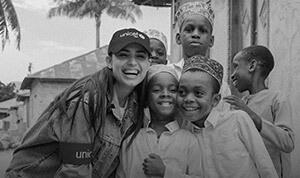
| UNICEF Ambassador Clay Aiken with children he met on his recent visit to Somalia. |
In a one-of-a-kind television event this Sunday, July 6, CNN will examine why 26,000 children die every day from preventable causes and what UNICEF is doing to save these young lives. Hosted by CNN's chief medical correspondent, Dr. Sanjay Gupta, "The Survival Project: One Child at a Time" will air at 8 and 11 pm (ET).
This historic broadcast will highlight four areas where UNICEF demonstrates its remarkable on-the-ground expertise in doing whatever it takes to save a child:
Leading experts in each of these key areas will contribute to a panel discussion moderated by Dr. Gupta.
"The Survival Project: One Child at a Time" is a chance to get a first-hand look at the plight of millions of children around the world, struggling each and every day for survival. We hope you'll tune in.
You may have read about CNN's special broadcast, “The Survival Project: One Child at a Time,” to air on July 6 at 8 and 11 pm (ET).
We encourage volunteers and supporters to not only watch the broadcast, but to host a viewing party to discuss these important issues of child survival. Chief medical correspondent for CNN, Dr. Sanjay Gupta, will host the broadcast highlighting progress and challenges in child survival.
To help, we’ve developed a viewing party guide that outlines just how easy it is to host a party. In addition, there are special incentives for those who wish to register their parties with us; the first 100 parties registered will receive a packet of materials including UNICEF signs and buttons.
So, please gather your friends and neighbors, and register your party today!
In this last year, everyone who has joined Microsoft’s I’m Initiative helped raise more than $255,000 for UNICEF’s lifesaving work for children. THANK YOU!
Now there’s a way for everyone, whether you use instant messenger or not, to join in. Recently, Microsoft expanded the I’m Initiative to Hotmail users. So if you have Hotmail and you choose UNICEF as your cause, all of those emails you send will start adding up to even more help for the world’s children.
To learn more and check out a conversation with U.S. Fund for UNICEF President & CEO Caryl Stern about the I’m Initiative, visit www.imtalkathon.com.
Soaring food costs are pushing a lot of families around the world into poverty. In some parts of the world, food prices have doubled. A UNICEF colleague recently reported that many families are coping with the price hikes by having only one meal a day. For young children, this is especially dangerous. Not getting enough food or the proper nutrition can stunt a child’s growth, weaken his immune system and, in extreme cases, lead to death. Actually, malnutrition plays a significant role in half of the 9.7 million child deaths each year. That’s why the present food crisis is such a critical threat to children around the world.
Addressing a packed hearing room of Congressional aides today, UNICEF Chief of Health Pete Salama brought encouraging news of UNICEF’s child survival successes in Africa and called for stepped up action to save even more children from dying from preventable...
Have you noticed from our recent efforts in China and Myanmar that UNICEF goes to extreme lengths to make sure children always have access to education, even in emergency situations?
![]() |
| © UNICEF/HQ07-1110/Shehzad Noorani |
Education is like a magic wand for children—it can provide them with a secure, happy and safe place to spend time (ping!); it can turn a scary future into one filled with possibility (swoosh!); it can even make a child healthier (tadaaa!).
Yes, education enables children to lead healthier lives, and to make improved choices for themselves and their future families. A recent study actually shows that better education leads to longer life expectancy. It is, as much as anything, a child survival issue. And achieving universal primary education by 2015 is one of the UN's Millennium Development Goals.
![]() |
| © © UNICEF/HQ08-0563/Win Naing |
![]() |
| © © UNICEF/HQ08-0559/Win Naing |
| |
| © UNICEF/HQ99-0619/Giacomo Pirozzi | |
We've mentioned tetanus a few times in recent blog posts (like here and here) and I thought I'd briefly explain just why tetanus is such a big deal for us. In the U.S., we're routinely vaccinated against tetanus as kids, and we generally don't have to worry about it unless we have an accident that makes us vulnerable—like stepping on a rusty nail or falling down some old stairs (as I did a few weeks ago, necessitating a tetanus booster shot).
But, in many countries, tetanus remains a very big problem. It's a truly awful and painful condition that develops when a bacteria, Clostridium Tetani, contaminates a wound or cut. (For more information than you may want about tetanus, check out this Wikipedia page.) And in some countries, the fatality rate for tetanus is 70 to 100 percent.
|
| © UNICEF/ HQ00-0003/Giacomo Pirozzi |
In celebration of National Volunteer Week we’re not only celebrating our volunteers, we are showing the power that their actions can have!
![]() |
Today I'd like to address one last comment to my original post on child survival. Kathryn Hornbein wrote, "In your comments today, I saw nothing about the issue of conflict and child mortality/morbidity. Yet I think a majority of problems are caused or aggravated by war…."
It's hard to believe that the simple act of sending an instant message can make such a difference, but it can. Through Microsoft's i'm Initiative™, Windows Live Messenger users who selected UNICEF as their cause of choice helped raise more than $250,000 to save children's lives, making us #1 out of the ten cause organizations that the initiative supports. If you're one of those users, we hope you'll like the video we made for you.
Today I’m responding to some of the comments I received on my original child survival post (with thanks to all of you who commented). A number of commenters want to get involved and help. We always love to hear that. A few, like Shahidha, worry they don’t have a lot to give financially. The truth is, there are many ways to help besides money. We’d be lost without our volunteers.
As you might imagine, it’s impossible to work here at the U.S. Fund for UNICEF and not feel interested in the candidates’ takes on child survival issues. I was really glad to discover that a partner organization of ours, ONE, has put together this excellent web feature at ONE Vote ‘08 that enables you to see -- side-by-side -- the candidates’ plans for addressing issues such as halting the spread of HIV/AIDS and tuberculosis, eradicating malaria, improving child and maternal health, and vastly reducing the number of people who don’t have access to enough food or clean drinking water.
We forgive you if you don’t know that 2008 is officially the International Year of Sanitation. The truth is, good sanitation is not something we have to spend a lot of time worrying about here in the U.S. But in the rest of the world? Believe it or not, 2.6 billion people – about 40 percent of the world’s population – don’t have access to improved sanitation.
Jen Banbury is on staff at the U.S. Fund for UNICEF and will be blogging regularly about issues affecting child survival around the world. This is her first post.
CHILD SURVIVAL. That’s a phrase we use a lot around here. And it means much more than you might think. You see, when we say “child survival” we’re actually talking about a pretty specific approach to saving children’s lives.
An editorial in today's Houston Chronicle shared the good news: The United Nations Children's Fund reports that for the first time since record-keeping began, in 1960, global child deaths have reached a record low, falling below 10 million per year...
When "American Idol," the FOX television network and the Charity Projects Entertainment Fund (CPEF) selected UNICEF to be one of the beneficiaries of the special "Idol Gives Back" broadcast and fundraiser this past April — the incredible potential to raise...
Tune into “World News with Charles Gibson” on ABC tonight to get an unfiltered glimpse of being done to reduce child mortality in some of Africa’s most impoverished countries. Bill Weir is reporting from Zambia--where health indicators are at critical...
We've been hearing from lots of folks that they've seen our new "Child Survival" PSA campaign on CNN and elsewhere. In case you haven't caught it yet, check it out below: Full-length (3:28) version 30 second (:30) version...
If you use an RSS reader, you can subscribe to a feed of all future entries tagged 'child survival'. [What is this?]
Welcome to Fieldnotes. Blogging gives us the ability to quickly report from the field, alert you to media coverage of interest, and share the success of UNICEF's lifesaving work around the globe.
We want to hear from you, so consider using the comment functionality to let us know what you think. Readers, please keep in mind that comments do not necessarily reflect official positions of UNICEF or the U.S. Fund for UNICEF. While we welcome multiple points of view here, we will review each comment prior to posting it and will not post comments that are off-topic or inappropriate for this public forum.
Frequent Contributors
Jen Banbury, Assistant Director of Editorial Services
Kristi Burnham, Director of Community & Volunteer Partnerships
Andrea Carricato, Interactive Marketing Manager
David Donaldson, Director of Education
Mark Engman, Director of Public Policy & Advocacy
Adam Fifield, Deputy Director of Communications
Martin Rendón, Vice President of Public Policy & Advocacy
Caryl M. Stern, President & CEO